“History Culture” search results (1000)

General knowledge of coffee history, coffee culture and history in Laos
Coffee in Laos has gone through a lot of development in the past 20 years. The speed of development in the past 20 years is faster than that in the past 80 years. The coffee history of Laos can be traced back to 100 years ago. At that time, France was the colonial ruler of Vietnam, Cambodia and Laos, and they began to experiment with growing various crops in these areas. Coffee was quickly found in farmers in Vietnam and Laos.
2015-03-23 Laos coffee history cultural history common sense
Development trend of fine coffee in the history of coffee culture
As long as it is delicious coffee, coffee consumers are willing to pay a high price; as long as delicious coffee is provided, consumers will not abandon coffee and the market will grow. High-quality coffee represented by boutique coffee is better than big business coffee producers and consumers have discovered this simple fact. In recent years, coffee producing countries no longer blindly pursue high output while neglecting quality.
2014-11-06 Coffee culture coffee history boutique coffee development trend
Three waves of Coffee in the History of Fine Coffee Culture
The first coffee wave: in the 1930s and 1940s, the US military took coffee as a necessity around the world to prevent combat fatigue, and the bitterness of coffee was known by the public as a pick-me-up. Then the invention and rise of instant coffee. The second Coffee Wave: after World War II, the Italian method of steam pressure extraction of espresso began to be familiar and accepted.
2014-11-22 Coffee culture coffee history coffee tide
The history of Cappuccino, the culture of fancy coffee
The monks of the St. Franciscan Church (Capuchin), founded after 1525, wore brown robes and pointed hats. When the St. Franciscan Church spread to Italy, the locals thought the monks' clothes were special, so they gave them the name Cappuccino. The Italian word refers to the loose robes and pointed hats worn by monks, derived from the Italian headscarf, namely Cappuccio. However,
2015-05-08 Cappuccino History Fancy style Coffee Culture set in 1525
The History of Fine Coffee Culture Coffee Culture in Germany
In 1721, the earliest coffee shop in Germany was born in Berlin. As soon as cafes became popular in Germany, they were restricted by the local authorities. Therefore, compared with other countries, the development of German coffee is relatively simple. It was not until the early 19th century that coffee became one of the best money-making tools at the disposal of Germans. The vigorous development of coffee cultivation in Latin America and Central America in the mid-19th century
2015-04-07 Boutique coffee cultural history Germany coffee culture 1721 early
Three waves of Coffee in the History of Fine Coffee Culture
The first coffee wave: in the 1930s and 1940s, the US military took coffee as a necessity around the world to prevent combat fatigue, and the bitterness of coffee was known by the public as a pick-me-up. Then the invention and rise of instant coffee. The second Coffee Wave: after World War II, the Italian method of steam pressure extraction of espresso began to be familiar and accepted.
2015-01-07 Boutique coffee culture history three times coffee tide first time
Papua New Guinea Coffee Culture Papua New Guinea Coffee History
Babu coffee flavor and taste characteristics: full particles, moderate acidity, mellow taste. Papua New Guinea is an island country in Oceania. Papua means curly hair in Malay. It is said that in 1545, the explorer Retes arrived on the island and found that most of the people on the island had curly hair, that is, the island was called the island of curly hair.
2016-05-29 Papua New Guinea Coffee Culture Coffee History
Coffee Culture in the Office of Fine Coffee Culture and History
For a more respectable Office, there are always two shiny coffee pots, and coffee is provided free of charge around the clock. A little more particular, there will even be a small coffee shop for employees to enjoy during the break. As a result, the jingling music of stirring coffee with a metal spoon here has become a kind of corporate culture. Provide free coffee
2015-03-06 Boutique Coffee Cultural History Office medium Coffee Culture but decent O
The basic knowledge of Fine Coffee Culture and the History of Coffee
African shepherds discovered strange coffee fruits on the plateau in about 500 AD. Since then, humans have known coffee. Coffee was planted in Arabian Peninsula and used as medicinal and religious feed. Coffee was introduced into Europe from Venice, Italy, in 1554. The colorful European coffee culture began to be born in 1616. Coffee was spread to the Netherlands from the port of Mocha.
2015-03-18 Boutique Coffee Culture fundamentals Common sense Coffee History 500 AD
The History and Culture of Cuban Coffee
In 1748, coffee was introduced into Cuba from Dominica, and Cuba began to grow coffee ever since.
2014-06-12 Coffee Culture Cuban Coffee History Coffee Encyclopedia
The History of Coffee in Colombia traces to Coffee Culture
The history of coffee cultivation in Colombia can be traced back to the Spanish colonial era in the 16th century, and there are many theories about the history of coffee in Colombia: one: it is said to come from the island of Haiti in the Caribbean and from El Salvador in Central America. Second: in 1808, a priest introduced coffee beans to Colombia for the first time from the French Antilles via Venezuela. One of them
2016-05-29 Colombia Coffee History Origin Coffee Culture cultivation
When was coffee introduced into the history of Chinese cultural development?
As China becomes richer, coffee culture is springing up in the land of tea drinkers. Coffee consumption is growing at an astonishing 15% a year, compared with the global average of 2%, according to the London-based International Coffee Organization. This partly stems from the reality that China's starting point is relatively low. The average Chinese drink only three cups of coffee a year, compared with 500 to 7 percent for Americans.
2016-10-18 Coffee when introduced Chinese culture development history introduction knowledge along with
Coffee Culture History French Naval officers and Coffee History
It was about 1720-1723 that French naval officer Gabriel. Mathieu. De. Klee was ordered to be stationed in Martinique. Before leaving Paris to take office, he managed to get some coffee saplings and decided to take it back to Martinique. It took him two attempts to bring the coffee saplings to Martinique. The saplings are kept in a glass with holes on the deck.
2015-02-09 Coffee cultural history France navy officers about in 1720-17
Costa Rican Coffee Culture Costa Rica Coffee History
Costa Rica, with a population of only 3.5 million, has 400 million coffee trees, and coffee exports account for 25 per cent of the country's total exports. Costa Rica also benefits from the Central American Society for Agricultural Research (Turrialba of the Central American Agricultural Research Institute, IAAC) in Tarasu, which is an important international research center.
2016-05-27 Costa Rica coffee culture coffee history population only 3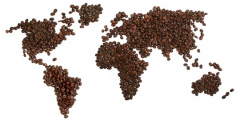
Chinese Coffee History Chinese Tea and Western Coffee Culture
(3) the unity of heaven, earth and man in tea culture and coffee culture the dichotomy of tea culture is the Taoist theory of the unity of heaven, earth and man. Taoism believes that heaven, earth and man are equal and should adapt to nature and take the initiative to understand the law, so that people can get the greatest satisfaction. Tea comes from the forest of the mountains, receives the essence of heaven and earth, and bears the rain and dew of abundant soil, which contains Taoism's indifference, serenity and return to nature.
2015-07-28 China Coffee History West Coffee Culture Tea Culture Day Oneness Coffee text
Fine coffee Honduran Coffee Culture History of Honduran Coffee
When it comes to coffee production, the geographical conditions of Honduras are no less than those of neighboring coffee-producing countries such as Guatemala and Nicaragua. However, due to the lack of strong support in the settlement and transportation of raw beans, Honduras is less well-known in the consumer market. Honduras (Honduras) exported $246424000 of coffee in 2010. There are two in Honduras.
2016-05-26 Boutique coffee Honduras coffee culture development history for production
The history and culture of Chinese coffee When did coffee come into China?
In Europe, coffee culture can be said to have been very weak, then, coffee into China when it? How long has it been in China? The earliest coffee cultivation in mainland China began in Yunnan Province in the early 20th century when a French missionary brought the first coffee seedlings to Binchuan County in Yunnan Province. Now in China's Guangdong, Guangxi, Yunnan, Taiwan and Fujian Xiamen and other places have a
2015-09-10 China coffee history culture when imported Europe coffee culture can say
The Historical and Cultural significance of Coffee: eastern Beverage and Western Culture
The historical and cultural significance of coffee: eastern drinks, Western culture this is the earliest painting known about British cafes. This 1674 woodcut comes from a single page of Paul Greenwood's advertisement for the virtues of sober and wholesome coffee drinks. Coffee, a familiar but mysterious drink, is like a strong wind blowing into our world from the west.
2016-09-24 Coffee history and culture meaning oriental drinks eastern beverage western culture history
The basic knowledge of Coffee Culture the History of Coffee in China
According to historical records, coffee trees were first planted in Taiwan in 1884, and coffee cultivation in mainland China began in Yunnan. In 1902, a French missionary named Tian introduced seeds from Yinggong County in Binchuan County, Yunnan Province. it was successfully planted in a place called Zhu Kula, which is located on the bank of the Yushan River, a tributary of the Jinsha River. The commercial cultivation of coffee in Yunnan began in 1985, but its development is slow.
2015-03-09 Coffee Culture Foundation Common sense Coffee China Legend Historical data Records 1884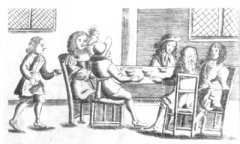
The Historical and Cultural significance of Coffee: eastern Beverage and Western Culture
The historical and cultural significance of coffee: eastern drinks, Western culture this is the earliest painting known about British cafes. This 1674 woodcut comes from a single page of Paul Greenwood's advertisement for the virtues of sober and wholesome coffee drinks. Coffee, a familiar but mysterious drink, is like a strong wind blowing into us from the west.
2015-09-14 Coffee history and culture significance Eastern drinks Western Culture